Pilates vs Strength Training After 40: Do You Need Both?
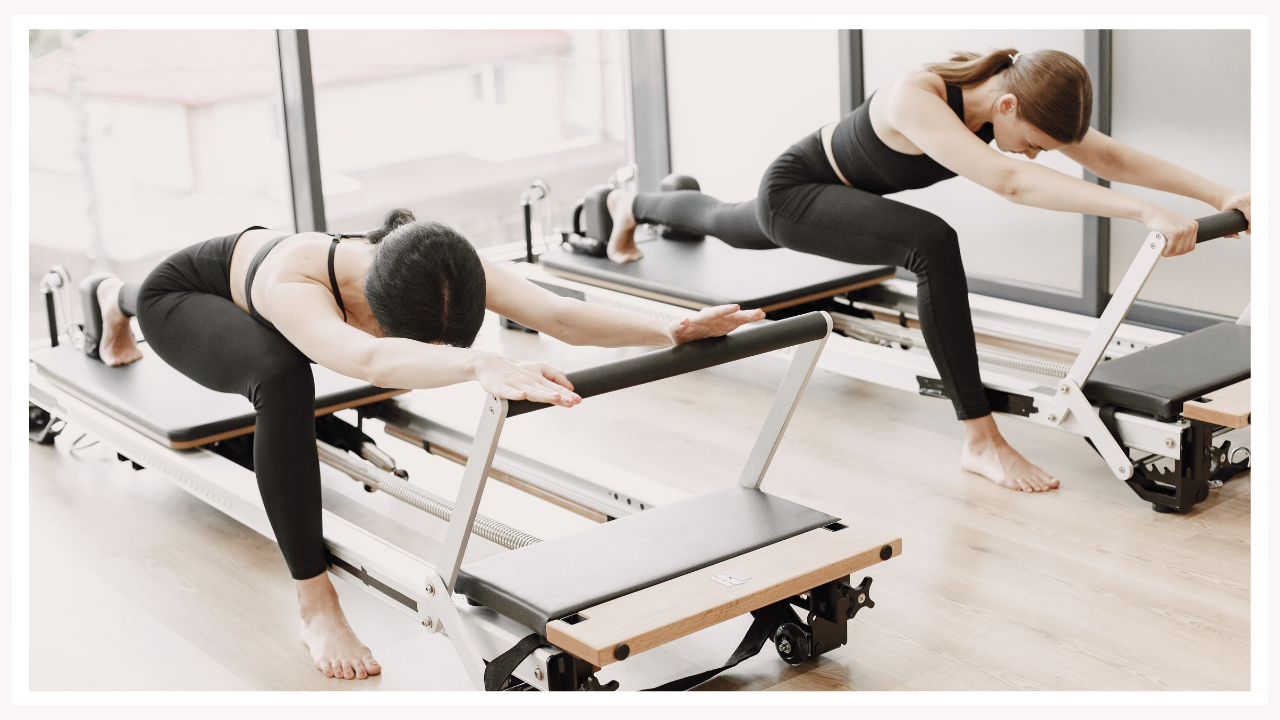
You could be forgiven for wondering whether we’ve all been lifting weights unnecessarily because reformer pilates beds are popping up everywhere - even at Bunnings (say, whaaattt???).
For decades we've been told Pilates builds muscle. Builds strength. Builds bone. Fixes your core. Improves your posture. Gives you long, lean muscles. Possibly does your tax return if you ask it nicely.
And somewhere in the promo flyer there will inevitably be:
“Pilates IS strength training.”
Which is where this conversation gets a bit messy.
Because technically, yes. Pilates uses resistance. Your muscles have to produce force against your bodyweight, gravity and, if you're using a reformer, spring resistance. It can be bloody hard. It can improve strength. And I am certainly not here to pick a fight with Pilates instructors — some of those women could probably kill me with their inner thighs.
But when a woman in her 40s, 50s or 60s asks me whether her Pilates classes give her everything she needs from strength training as she gets older, that's a slightly different question.
And the answer needs a bit more than a yes or no.
First, what are we trying to achieve?
This is the bit that gets lost when exercise methods become tribes.
I'm not particularly interested in whether Team Pilates can beat Team Barbell in competition.
I'm interested in what we want our bodies to be capable of at 60, 70, 80 and beyond.
We want to retain muscle.
We want to be strong.
We want strong bones.
We want balance and coordination.
We want enough muscular power to catch ourselves if we trip, get ourselves off the floor and climb a flight of stairs without contemplating whether moving to a single-storey house might be a whole lot easier.
We want to carry the shopping bags, lift the duty-free stash into the overhead locker, move furniture when a redecorating whim takes hold and pick up a wriggling toddler without needing three days of anti-inflammatories afterwards.
And we want to keep doing as much of that for ourselves as possible.
Muscle isn't simply something we build because we like how it looks in a strappy dress. Maintaining strength and muscle as we age contributes to physical function and our ability to keep doing everyday things independently.
That's why resistance training has become such a big part of the conversation around women's health. And thank GOD for that.
Those of us who survived the fitness advice of the 80s and 90s have already spent quite enough time trying to make ourselves smaller.
So, does Pilates build strength?
Yes. Absolutely.
There. Nobody needs to throw a reformer spring at me.
Pilates challenges your muscles. Mat Pilates uses bodyweight and gravity; reformer Pilates adds spring resistance. Depending on the exercise, your training history and how the session is programmed, that can provide a meaningful strength stimulus.
Pilates also has plenty of other things going for it. It can challenge muscular endurance, trunk control, stability, coordination, balance, mobility and body awareness. And if you've ever done a decent Pilates class, you certainly don't need me to tell you it can be hard.
Pilates and traditional strength training overlap, but they tend to emphasise different adaptations.
There is also research showing Pilates can improve strength.
So when somebody says “Pilates isn't strength training”, that's too simplistic for me.
But so is saying “Pilates is strength training, therefore you don't need anything else.”
Because now we need to talk about something considerably less sexy: Progressive overload.
Your body needs a reason to change
Our bodies are annoyingly efficient. Give your body a challenge it isn't accustomed to and it adapts. Keep giving it exactly the same challenge once it has adapted and there's less reason for it to keep changing.
Progressive overload simply means increasing the demand placed on the body over time.
And there are lots of ways to do that. You can increase resistance, repetitions, sets, range of motion or exercise difficulty.
Traditional resistance training makes this particularly easy to measure.
Maybe you begin goblet squatting 8 kilograms. Eventually that isn't particularly challenging, so you use 10 kilograms. Then 12. Then perhaps 14.
Congratulations. You've progressively increased the amount of force your muscles need to produce.
You don't have to become the woman wandering around the gym with a clipboard recording every repetition — although I fully support a good training log — but there needs to be some mechanism by which your body continues to be challenged.
The enormous 2026 American College of Sports Medicine position stand pulled together 137 systematic reviews involving more than 30,000 participants. Resistance training improved strength, muscle size, power, muscular endurance, balance and several measures of physical function.
And one of the really useful messages from that research is that we don't need to make strength training ridiculously complicated.
For increasing strength, heavier resistance is particularly useful. For increasing muscle size, sufficient training volume matters. And you don't need one magical piece of equipment — free weights, machines, bands and bodyweight resistance can all have a place.
What matters is providing an appropriate challenge and continuing to progress it.
But my muscles BURN in Pilates!
Ohhhh, the burn. We need to talk about this one because women have been sold THE BURN for decades.
If your legs are shaking, your bum is on fire and you're wondering whether you'll ever walk normally again, it certainly feels as though something impressive must be happening.
And something IS happening.
But the sensation of a muscle burning isn't a little notification from your glutes saying: CONGRATULATIONS, MUSCLE GROWTH NOW IN PROGRESS.
A workout feeling difficult doesn't automatically tell us which adaptation it will produce.
You can make an exercise extraordinarily uncomfortable using a light resistance for lots of repetitions. You can also perform five very heavy repetitions without experiencing anything resembling the same burn.
Both can be hard. They're simply not identical training stimuli.
That's an important distinction because those in social media land have become very fond of treating “that was hard” and “that will build maximal strength” as though they're interchangeable.
They're not.
And then there are our bones
This is where I become particularly interested for women in midlife.
Bone isn't static tissue. It responds to mechanical loading, and the type and magnitude of that loading matter.
After menopause, declining oestrogen accelerates bone loss, which is one reason I don't want women waiting until somebody tells them they have osteopenia before strength and bone health suddenly become important.
There is evidence that appropriately prescribed progressive resistance training can help support bone mineral density.
One of my favourite studies in this area is the Australian LIFTMOR trial, which looked at postmenopausal women with low bone mass.
Women performed supervised high-intensity resistance and impact training twice a week for eight months. Compared with the low-intensity exercise group, the women doing the high-intensity program improved lumbar-spine bone mineral density and maintained or improved measures at the femoral neck, while also becoming considerably stronger and improving physical function.
And before anybody with osteoporosis races into the gym tomorrow and starts deadlifting at more than 85% of their one-rep max...
Please don't.
The women in LIFTMOR were screened and the training was supervised. If you have osteoporosis, osteopenia, previous fractures or other medical considerations, exercise selection and progression need to be appropriate for you.
Now, what about Pilates and bone?
This is where I don't want to do what the internet loves doing and turn a nuanced evidence base into:
PILATES DOESN'T BUILD BONE!!!
We don't have enough evidence to make sweeping claims like that.
A systematic review and meta-analysis examining Pilates and bone mineral density in postmenopausal women found no significant improvements at the lumbar spine, total hip or femoral neck. But — and this matters — only three randomised trials met the criteria, and the authors considered the evidence too limited and generally too low in quality to draw strong conclusions.
So the sensible interpretation isn't Pilates is useless for bone.
It's that we currently have much stronger evidence for appropriately loaded resistance and impact exercise when improving or preserving bone strength is the goal.
That's an important distinction.
“But I don't want to get bulky”
There she is. I wondered when she'd arrive.
This fear has followed women around gyms since Jane Fonda first put on a leotard.
Somehow we've been convinced that lifting a challenging dumbbell twice a week will accidentally turn us into Arnold Schwarzenegger, while simultaneously spending enormous amounts of money trying desperately to preserve muscle everywhere else.
Building substantial amounts of muscle is not something that happens accidentally, particularly for women.
And once we're into midlife, losing muscle is a considerably bigger concern of mine than accidentally acquiring too much of it.
I want muscle.
I want strong legs.
I want shoulders capable of trimming my own tree branches.
I want glutes that help keep my hips, knees and pelvis doing their jobs.
I want enough grip strength to open my own jars, thank you very much.
And I'd quite like all of that muscle to accompany me into old age.
So should you stop doing Pilates and start lifting weights?
No.
If you love Pilates, for heaven's sake KEEP DOING PILATES.
Exercise doesn't need to become another miserable health chore we're forcing ourselves through because somebody on Instagram told us we're ageing incorrectly.
Pilates can contribute useful things to a training week: strength, muscular endurance, stability, control, balance, coordination and mobility.
If it makes you feel good and you enjoy it, that's another fairly compelling reason to keep it.
But if you're asking me specifically what I want women over 40 doing to build and preserve muscle, increase strength and provide a meaningful loading stimulus for bone, I want progressive resistance training in there.
That doesn't mean you need five days in a gym.
For many women, two or three properly programmed full-body strength sessions each week can do a lot of heavy lifting — excuse the pun — and Pilates can sit beautifully alongside them.
Maybe you lift twice and do Pilates twice.
Maybe you lift three times and do Pilates once.
Maybe Pilates is your favourite thing in the world and strength training is the supporting act.
Your exact week doesn't need to look like somebody else's.
But I wouldn't swap progressive resistance training completely for Pilates and assume we're getting exactly the same adaptations.
We're not.
Pilates versus weights is probably the wrong argument
I suspect this is why the whole debate irritates me slightly. We don't need to pick a side.
I'm not Team Dumbbell standing outside a reformer studio waving a placard. Different types of exercise can do different jobs.
I strength train because I want muscle, strength, power and strong bones.
I walk because I enjoy it and want the cardiovascular and general health benefits.
I do mobility work because at 56 my body occasionally sends strongly worded reminders that I'm not 26 anymore. Relate, anyone?
And somebody else might use Pilates because she loves the control, movement, stability and challenge it gives her. That's a pretty good combination.
The only thing I want women to understand is what each part of their training is doing for them.
Because once you understand that, you don't need TikTok to tell you whether Pilates has suddenly replaced strength training this week.
And next week when somebody announces we've all been exercising incorrectly and should instead be walking backwards carrying a kettlebell while wearing a weighted vest...
Well.
We'll deal with that when it happens.
XO Jane
DOWNLOAD YOUR FREE
MIDLIFE RESET GUIDE
Part pep talk, part power move—your midlife guide to ruling the chaos with grit, grace, and a side of snark.
I hate spam more than I hate bad hair days. Your info’s safe with me—I promise.