Can we talk about what's happening with our hair
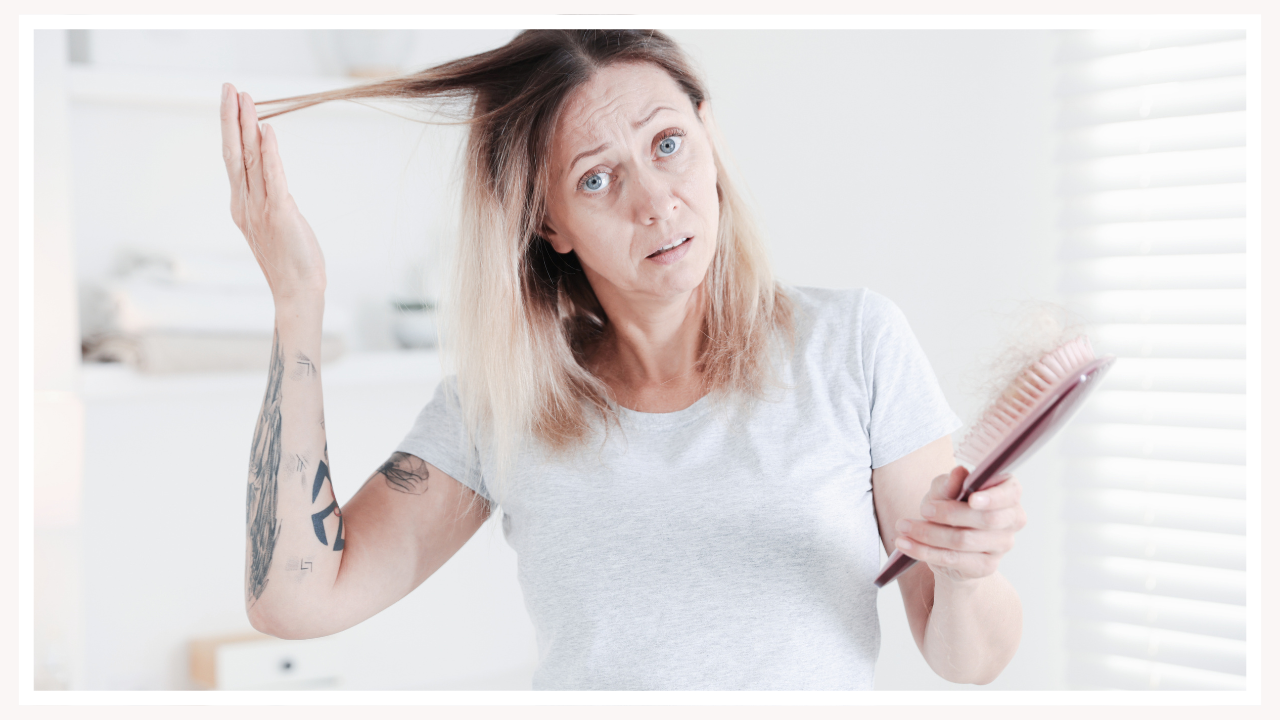
There's this specific kind of dread that happens in the shower.
You're standing there, minding your own business, doing a perfectly normal shampoo, and you look down at your hand and think: that is a concerning amount of hair. Then you look at the drain. Then you think about the pillow this morning. Then you think about that photo from your cousin's wedding five years ago where you had, objectively, a great head of hair.
Then you try not to spiral.
If this is you — you are not alone and you are not imagining it. Hair loss and thinning in women over 40 is genuinely, medically common. It's also genuinely, medically undertreated. Most of us get told it's "just ageing" or handed a bottle of biotin and sent on our way. And look, I have nothing against biotin, but it seems to be acting as a catch-all answer for something that actually has real, diagnosable, treatable causes.
I went down a fairly deep research rabbit hole on this one — partly out of personal interest, partly because I kept hearing the same story from women around me. Doctor visit. Vague reassurance. Biotin. Nothing changes. So here's what I actually found out from my own dermatologist (who, may I add, is my age and has an amazing mane of dark locks).
First: Why Is This Happening?
The frustrating answer is that it's usually several things at once. Your hair follicle is one of the most metabolically demanding little structures in your body. It's sensitive to hormones, nutrition, inflammation, and stress — which means when perimenopause and menopause come along and start moving all those dials at once, your hair notices.
The hormonal stuff. The most common cause of hair loss in women over 40 is something called female pattern hair loss (or androgenetic alopecia if you want the medical name). What you typically see is thinning across the crown and top of the scalp — your part gets wider, your ponytail gets thinner. As oestrogen drops during perimenopause and menopause, your follicles become more sensitive to androgens (yes, women have them too), and they start producing finer, shorter, less pigmented hairs over time. The follicle isn't dead — it's just... downsizing. Which feels extremely on-brand for midlife :)
The stress shed. This one's called telogen effluvium, and it's the serious one — the handfuls in the shower, the alarming clumps on the brush. It happens when something shocks your system and pushes a large chunk of your follicles into the resting phase all at once. Could be illness, surgery, a medication change, a rough patch emotionally, a nutritional crash, or the hormonal rollercoaster of perimenopause itself. The fun part is there's a 2 to 4 month delay between the trigger and the shed — so by the time you're watching your hair fall out, you're trying to think back to what happened three months ago. The good news is this type is usually reversible once you figure out and fix the cause.
The iron thing (this one is huge). Here's the one that doesn't get talked about nearly enough. Iron deficiency is one of the most common causes of hair loss in women, and most of us never get properly tested for it. The mistake is checking haemoglobin and thinking that tells the whole story — it doesn't. What you actually need checked is your ferritin, which is your stored iron. You can have haemoglobin in the normal range and ferritin so low that your follicles are struggling. Research suggests iron deficiency shows up in around 70% of women presenting with hair loss. Seventy percent. And the level you're aiming for isn't just "not anaemic" — for hair growth, you want ferritin somewhere between 40 and 60 ng/mL minimum, not the lab's normal cutoff of 15, which is basically the floor before things get medically serious.
If you take nothing else from this blog, take this: ask your doctor for a ferritin test specifically. Not just a standard blood count. A ferritin.
The thyroid. Hypothyroidism is another common trigger for the stress-shed type of hair loss, and it's associated with more significant shedding. It's also one of the easier things to test for. If nobody has checked your thyroid recently, add that to the list.
Everything else. Vitamin D deficiency, various medications, autoimmune conditions, chronic stress — all on the table. Hair is basically your body's way of broadcasting its overall state, which is charming when everything is going well and deeply inconvenient when it isn't.
One more thing worth knowing: there are some less common hair loss conditions that look a bit different — patches of loss, scalp redness or burning, or a hairline that seems to be moving backwards. Those need a proper dermatologist who specialises in hair, and sooner rather than later, because some of them can cause permanent damage if left untreated.
The GLP-1 Connection
Okay, let's address the thing a lot of us are secretly googling at 11pm.
If you're on a medication for weight loss — semaglutide, tirzepatide, retatutride, whatever you're on — and you've noticed your hair has started shedding more than usual, you're not imagining that either. It's a real and pretty commonly reported thing.
The medication itself isn't directly attacking your hair follicles (despite what those anonymous posters in social media group chats say). What's happening is that rapid weight loss is a significant physical stressor, and your body responds to significant physical stressors by doing exactly the stress-shed thing I described above. Your system goes into triage mode, prioritises the vital stuff — heart, brain, liver — and hair gets bumped down the list.
What makes this a bit different from other telogen effluvium triggers is that unlike, say, a surgery or an illness, the "stressor" (continued weight loss) keeps going. So the hair cycle doesn't get a chance to just reset and move on. The shedding can continue for as long as the rapid weight loss continues.
On top of that, when your appetite is suppressed and you're eating significantly less, it's very easy to end up deficient in the exact nutrients your hair depends on — iron, zinc, vitamin D, B12, and especially protein. Hair is made of protein. Your body needs amino acids to build it, and when intake is low and your body is choosing where to direct resources, hair is not a priority. Most people eating on GLP-1 appetite suppression discover — when they actually add it up — that they're getting maybe 40 to 50 grams of protein a day when they need closer to triple that. That gap shows up in your hair about two to three months later.
There's also the oestrogen piece. Fat tissue plays a role in oestrogen production, so when body fat drops significantly, oestrogen can drop with it — which then loops back into the hormonal hair loss picture, especially for women who were already heading into perimenopause territory.
And if you were already genetically predisposed to female pattern hair loss, rapid weight loss can act as a trigger that brings it on earlier or accelerates what was already quietly underway.
Here is the reassuring part though: for most women, GLP-1-related hair shedding is temporary. Once your weight stabilises and your body adjusts, the follicles come back online. Most people see it resolve within 6 to 12 months. It's not permanent damage — it's your body adapting to a significant change.
What helps if you're on a GLP-1:
Get your numbers checked — ferritin, thyroid, vitamin D, zinc, B12. Do this early if you can, before major shedding starts, so you know your baseline. Hit your protein target properly — aim for 80 to 120 grams a day, which will feel like a lot if you've been relying on appetite suppression to guide your intake. Prioritise protein-dense foods: eggs, fish, chicken, legumes. Add zinc-rich foods like pumpkin seeds and chickpeas. And if the shedding is bad or you're seeing a pattern developing rather than a general shed, don't sit and wait for it to fix itself — get a proper hair assessment from someone who knows what they're doing - such as a dermatologist.
What Should Happen at the Appointment
A proper workup for hair loss in a woman over 40 should include, at minimum: ferritin (with a target of 40 to 60 ng/mL, not just "normal"), a TSH and thyroid panel, vitamin D levels, and a review of your medications. If there are signs of androgen excess — think irregular cycles, adult acne, hair growing in unwanted places while disappearing from your head (the universe has a wonderful sense of humour) — then hormonal labs are worth adding.
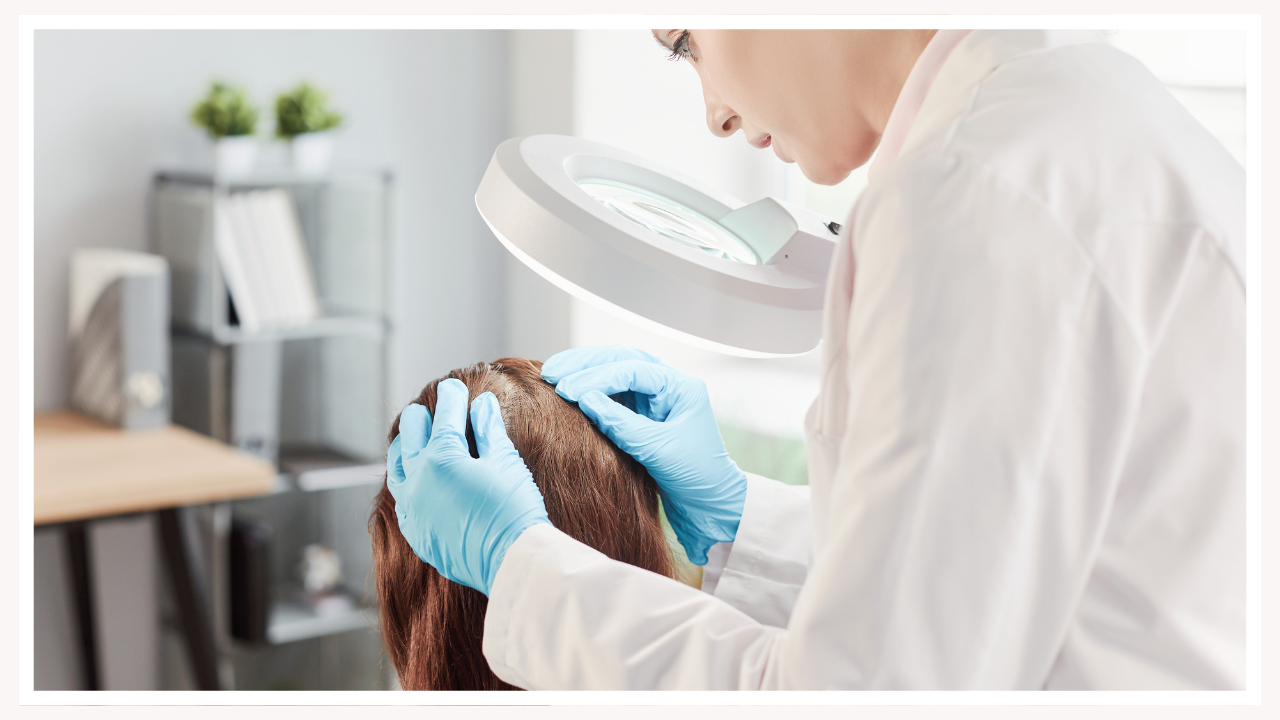
A scalp exam matters too, because the pattern of where you're losing hair tells a lot of the story. Diffuse thinning at the crown is different from patches, which is different from a receding hairline — and they point to different causes and treatments.
If your doctor waves you off with "it's just ageing," it's completely reasonable to go back and ask for the specific tests. You're not being neurotic. You're asking for information that's clinically relevant.
What Actually Works
Good news, female hair loss in midlife is genuinely treatable. Here's what has real evidence behind it.
Topical minoxidil is the most established treatment for female pattern hair loss — it's been around for decades and it works by extending the follicle's growth phase. The standard is 2% solution twice a day or 5% foam once a day, and you need to give it at least six months before judging results. The catch is that it's a long-term commitment — stop using it and the progress reverses. The other catch is that it leaves residue, which gets logistically fiddly if you don't wash your hair daily, colour your hair, or both. It works. The daily reality of fitting it around real hair management can be a bit tedious.
Low-dose oral minoxidil is the newer option and is the one a lot of women are switching to. I have been taking minoxidil for the past two years. Small pill, no residue, no timing gymnastics. The evidence is solid for female pattern hair loss and it's generally well tolerated. It does require a prescription and a doctor who knows the dosing. One thing worth knowing upfront: oral minoxidil can cause some hair growth in places other than your scalp — a bit of extra facial fuzz for some people. Manageable for most, but worth knowing before you start rather than after.
Finasteride and antiandrogens like spironolactone are options that work on the hormonal driver of female pattern hair loss, particularly for postmenopausal women or those with signs of androgen excess. These need to be prescribed and managed by someone who knows what they're doing.
Fix the deficiencies. This is the foundation everything else sits on. No amount of minoxidil will compensate for ferritin of 9 or an undertreated thyroid. If there's a nutritional or hormonal cause, that has to be addressed first — or at the same time, at minimum.
Procedural options like platelet-rich plasma, microneedling, low-level laser therapy, and hair transplantation are real options, often used alongside medical treatment rather than instead of it, for more significant cases.
The "natural" options — saw palmetto, pumpkin seed oil, that kind of thing — have some early evidence as supporting players, but the data is much weaker than the prescription stuff. If you want to add them, fine, but don't rely on them to carry the team.
The most important thing: combination approaches consistently outperform single treatments. Hair loss in midlife is usually coming from more than one direction, and the response needs to match that. One supplement is not a plan.
The Bottom Line
Your hair thinning is not a vanity issue. It's not "just ageing." It's a medical situation with identifiable causes and real treatment options, and you are allowed to push for proper answers.
Get the ferritin checked. Get the thyroid checked. If you're on a GLP-1, get your protein up and your nutrient levels monitored. Find a doctor or dermatologist who takes this seriously — they exist, and you deserve one.
And if you've been sitting with that quiet shower-drain panic for a while, feeling like it's somehow silly to be bothered by this — it's not silly. Your hair is part of how you move through the world, and wanting to keep it is completely reasonable.
You've got more options than a bottle of biotin. Go find them.
X Jane
PS - you may want to check out my You Tube video that goes into depth on all this hairy stuff. [Click on the image below]
DOWNLOAD YOUR FREE
MIDLIFE RESET GUIDE
Part pep talk, part power move—your midlife guide to ruling the chaos with grit, grace, and a side of snark.
I hate spam more than I hate bad hair days. Your info’s safe with me—I promise.