GLP-1s and Eating Disorders: The Conversation We Need To Have
Recently I attended a seminar run by AUSactive on GLP-1 medications and their relationship with eating disorders.
It was one of those sessions that makes you sit up a little straighter in your chair.
Because it highlighted something important that isn’t being talked about nearly enough.
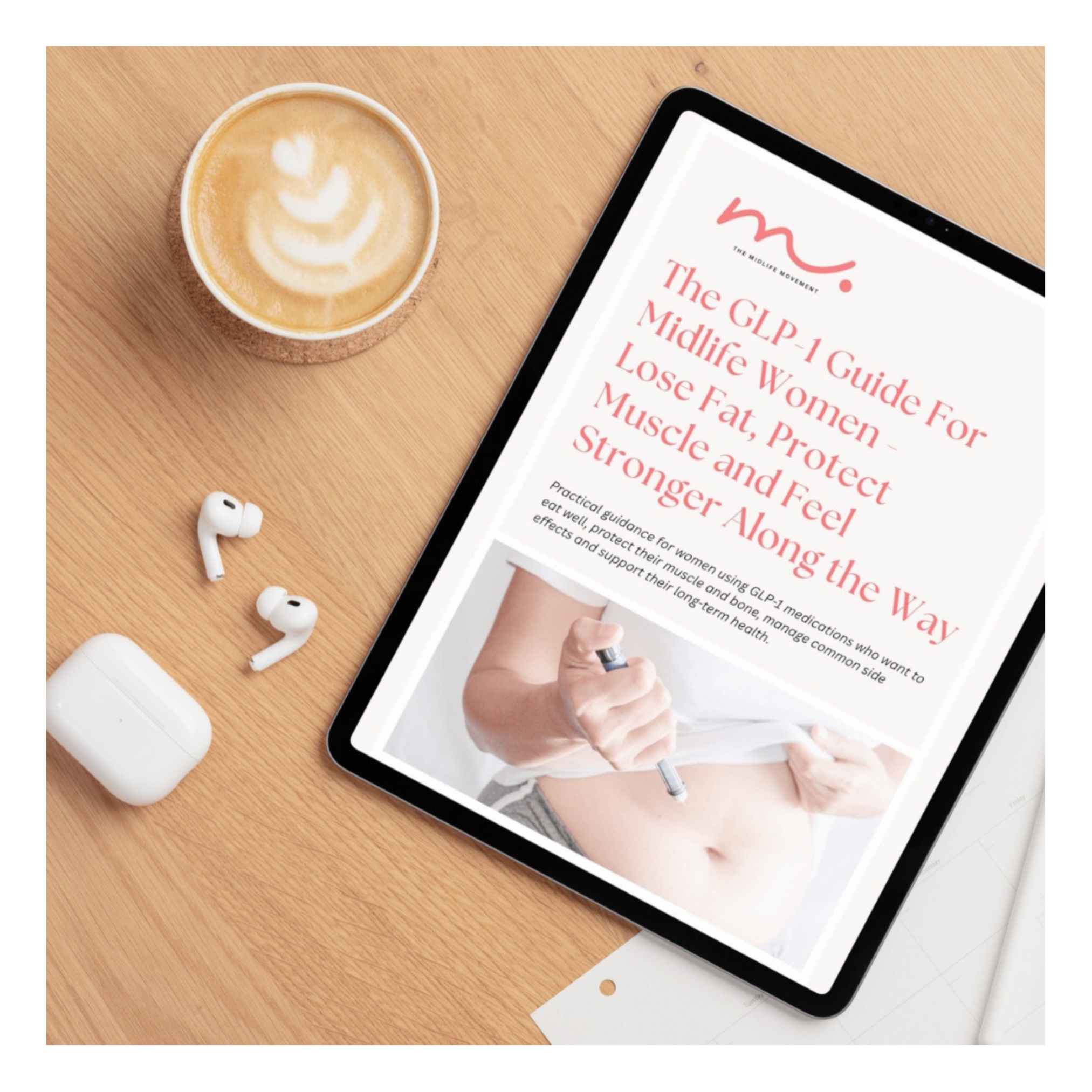
GLP-1 medications are becoming increasingly common. More and more midlife women are either using them, considering them, or coming off them. And as someone who works with women around their relationship with food, movement and body confidence, I think it’s important we understand the full picture.
This conversation isn’t about judging anyone who chooses to use these medications.
They are a legitimate medical tool and for some people they can be incredibly helpful.
But like anything that influences appetite, weight and eating behaviour, they sit within a much bigger landscape — one that many midlife women already have a long history with.
And that’s where things get interesting.
Appetite Suppression Changes the Game
One of the primary effects of GLP-1 medications is appetite suppression.
Many people describe something they’ve never experienced before.
The constant chatter about food quietens down.
Hunger feels less urgent.
Portions naturally become smaller.
For someone who has spent years battling food noise or constant hunger, that can feel like a huge relief. And in many cases, it is.
But appetite suppression also changes eating behaviour in ways we’re only just starting to understand more deeply.
When hunger signals are dialled down, it becomes much easier to eat very little without realising the longer-term impact.
That’s not necessarily intentional restriction. Often it’s simply biology doing what the medication is designed to do.
But when someone already has a complicated history with food — decades of dieting, restriction, bingeing, or body image struggles — appetite suppression can sometimes mask patterns rather than resolve them.
Why Eating Disorder Specialists Are Paying Attention
Researchers and clinicians in the eating disorder field are beginning to pay closer attention to GLP-1 medications.
Not because the medications themselves are inherently harmful.
But because they significantly alter hunger and fullness signals — which sit at the centre of eating behaviour.
For some individuals with a history of restrictive eating patterns, appetite suppression may unintentionally reinforce behaviours that already exist.
At the same time, some research is exploring whether these medications may help reduce binge-eating episodes by lowering the intensity of food urges.
So the relationship between GLP-1 medications and eating disorders isn’t simple.
It’s nuanced, and it varies from person to person.
What many experts agree on is that behavioural and psychological support alongside medication matters.
The Midlife Factor
Midlife adds another layer to this conversation.
Many women in their forties, fifties and beyond arrive at this stage of life with decades of dieting behind them.
Food rules.
Good foods and bad foods.
Starting again every Monday.
Feeling like willpower is the problem.
When appetite suddenly becomes quiet, it can feel like the solution we’ve been waiting for.
But if the underlying beliefs about food and body size haven’t shifted, those patterns can still sit quietly beneath the surface.
And that’s where support, education and awareness become important.
The Part That Often Gets Missed
Another big topic that came up in the seminar was what happens when people stop taking the medication.
There are many reasons this might happen — goal weight reached, side effects, supply issues, cost, or medical advice.
When the medication stops, appetite often returns.
Sometimes gradually.
Sometimes quite strongly.
If the deeper work around food behaviours, coping strategies and mindset hasn’t been addressed, that return of hunger can feel unsettling.
Not because someone has failed.
Simply because biology has changed again.
This is why many professionals are starting to advocate for more collaborative care when these medications are prescribed — involving GPs, dietitians and mental health professionals.
Weight loss alone doesn’t tell the full story of health.
The Bigger Picture
GLP-1 medications are powerful tools.
But like all powerful tools, they work best when they sit inside a bigger framework of support.
Understanding nutrition.
Maintaining muscle through strength training.
Developing coping strategies that don’t revolve around food.
And building a relationship with your body that isn’t dependent on restriction or control.
These things matter whether someone is taking a medication or not.
And they become even more important when appetite signals are being altered.
A Conversation We Need To Have
The goal of this conversation isn’t to scare anyone away from GLP-1 medications.
It’s simply to widen the lens.
Because midlife women deserve better than another cycle of quick fixes followed by confusion when things change again.
We deserve support that considers both physical and mental wellbeing.
And that includes having honest conversations about how these medications interact with our relationship with food.
The more we talk about it, the better equipped women will be to navigate this space with confidence — and with the support they deserve.
XO Jane
DOWNLOAD YOUR FREE
MIDLIFE RESET GUIDE
Part pep talk, part power move—your midlife guide to ruling the chaos with grit, grace, and a side of snark.
I hate spam more than I hate bad hair days. Your info’s safe with me—I promise.